


Fewer, Better, Closer: What’s Shaping Fashion Demand?
Consumers are looking for “fewer, better, closer” fashion: fewer purchases, better value and quality, and a closer connection to the brands and products they choose.
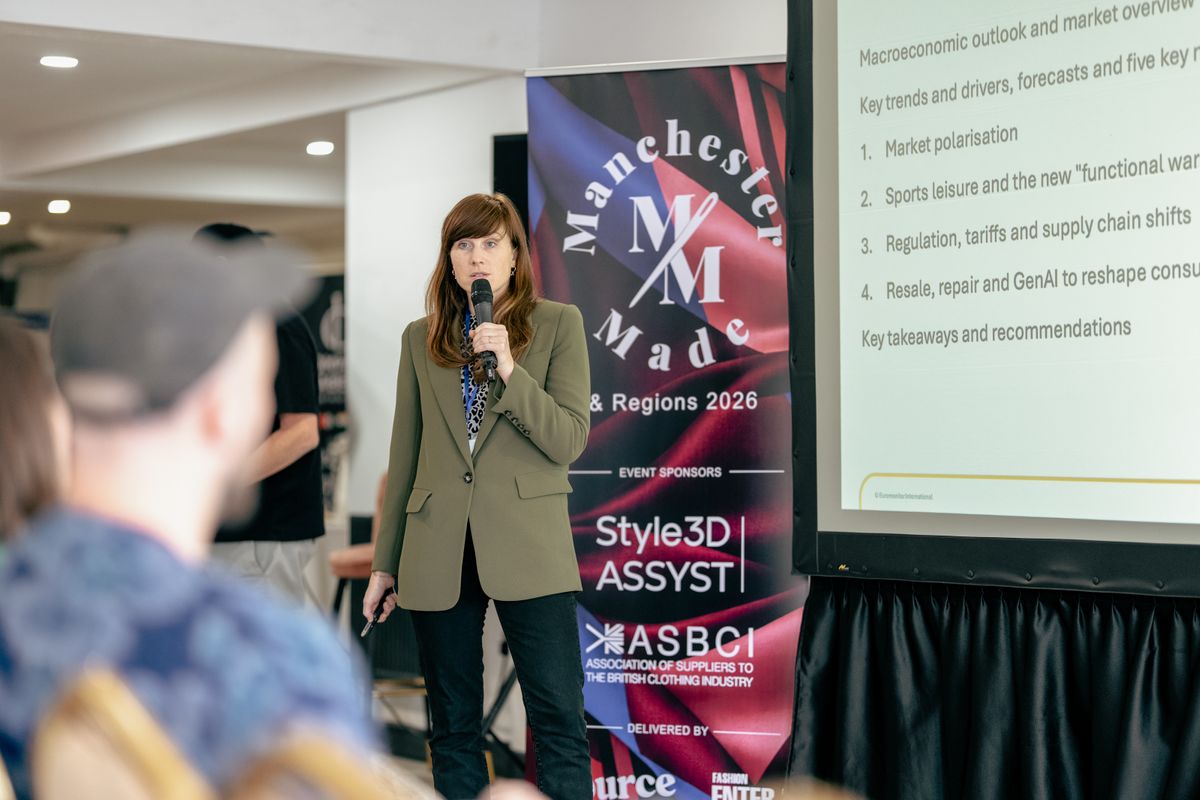
At Manchester Made & Regions on 4 November, Marguerite Le Rolland, Global Insights Manager for Fashion at Euromonitor International, shared her outlook on the forces reshaping fashion in the UK and Europe.
A market under pressure
Economic uncertainty is changing how people spend. Euromonitor’s research, presented at the event, found that 45% of global consumers planned to increase their savings in 2026. Shoppers are also weighing purchases against experiences, and comparing products and prices online before buying.
The UK remains Europe’s largest apparel and footwear market, with a forecast retail value of £61.7 billion in 2026. But growth looks very different once inflation is taken into account: the presentation forecast a small real-term decline over the next five years.
That pressure is reshaping the market. Value-focused retailers and premium brands are finding opportunities, while many mid-market businesses face a tougher fight to show why their products are worth the price.
Value means more than a low price
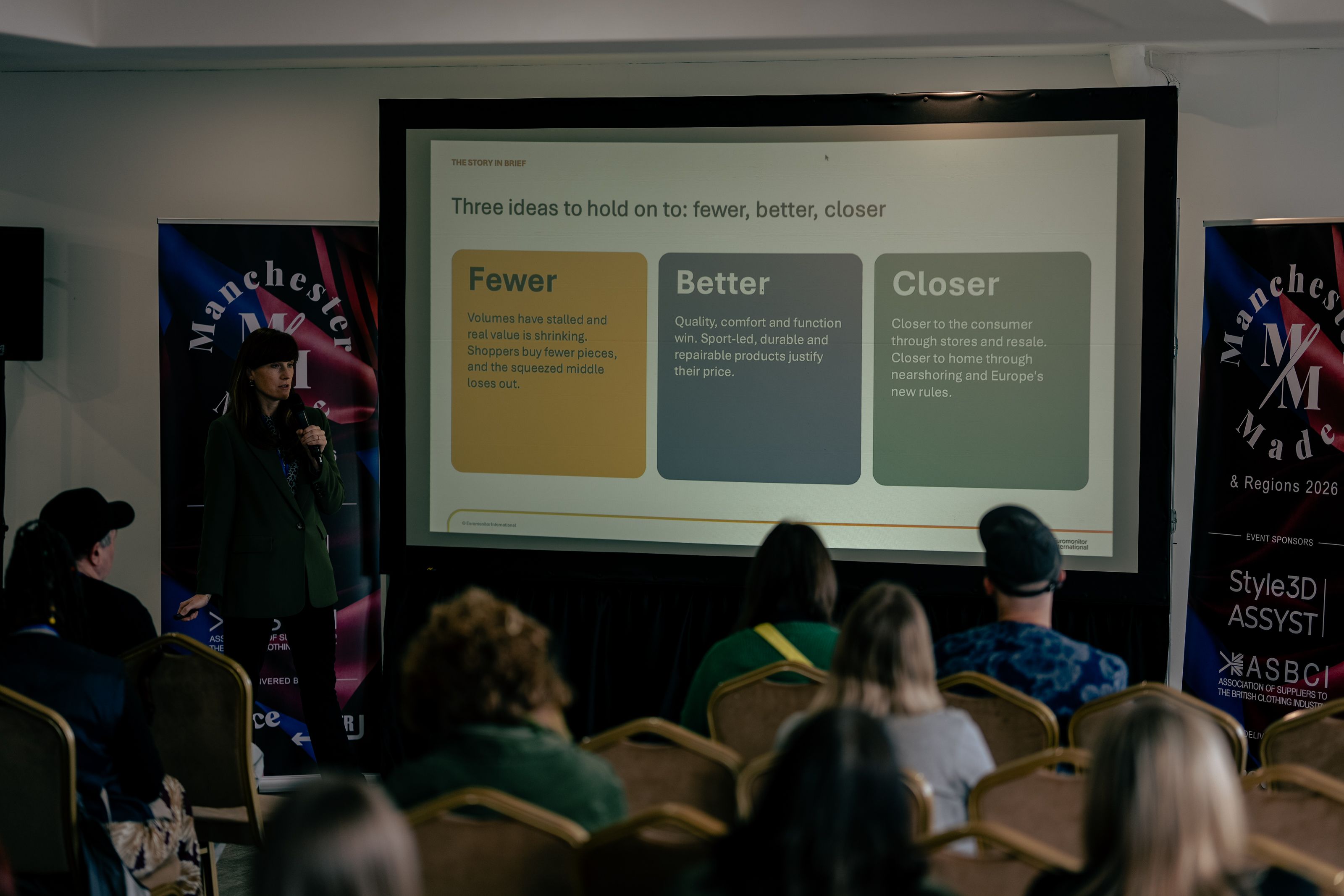 For shoppers, comfort, value for money, quality and durability rank among the leading considerations when buying fashion. Le Rolland’s presentation described value as a combination of price, quality, experience and personal values.
That creates room for brands to make a clearer case for their products: how they fit, how long they last, how they function and what makes them distinctive. It also helps explain the appeal of sportswear and athleisure, where comfort and performance can carry across more parts of the wardrobe.
Wellness is another influence. The research presented placed wellness high among consumers’ spending priorities, alongside interest in both physical and mental wellbeing. For fashion businesses, that opens up possibilities in functional clothing, specialist products and collaborations that connect fashion with wellness.
Supply chains and shopping are changing
The presentation also highlighted how tariffs, rising input costs and new regulations are prompting businesses to rethink sourcing and product information. Diversifying production across countries can help companies manage risk, but it also brings more suppliers and data to track. Rules affecting unsold stock and product traceability are adding to the need for clearer supply-chain information.
At the same time, resale and repair are becoming part of how people shop. Generative AI is beginning to influence product discovery too: Euromonitor’s 2026 consumer research found that 22% of respondents said it influenced their shopping.
The trends point to a practical challenge for fashion businesses: focus ranges, demonstrate quality and durability, and make product information easy for both customers and digital tools to understand.
As Manchester continues to attract fashion retailers expanding beyond London, the city is part of the changing landscape Le Rolland described: a market where brands need to earn attention by offering products that feel useful, lasting and worth their price.