

波动性是否是我们无法推动可持续发展前进的原因?
)
We've built a fashion system addictively good at one thing: speed. Newness at any cost.
Profit measured by this quarter, not the next decade. When the world wobbles - pandemics, geopolitics, supply chain crunches, commodity spikes - our reflex is to point at 'volatility' as if it's a freak event. It isn't.
Volatility is the climate we now trade in. If a business can only behave responsibly in perfect weather, it's not a business model; it's a fair-weather hobby. So, let's stop asking whether volatility prevents sustainability and start asking a sharper question: how do we design for volatility so sustainability becomes the resilient, profitable default - not the first thing cut when margins squeal?
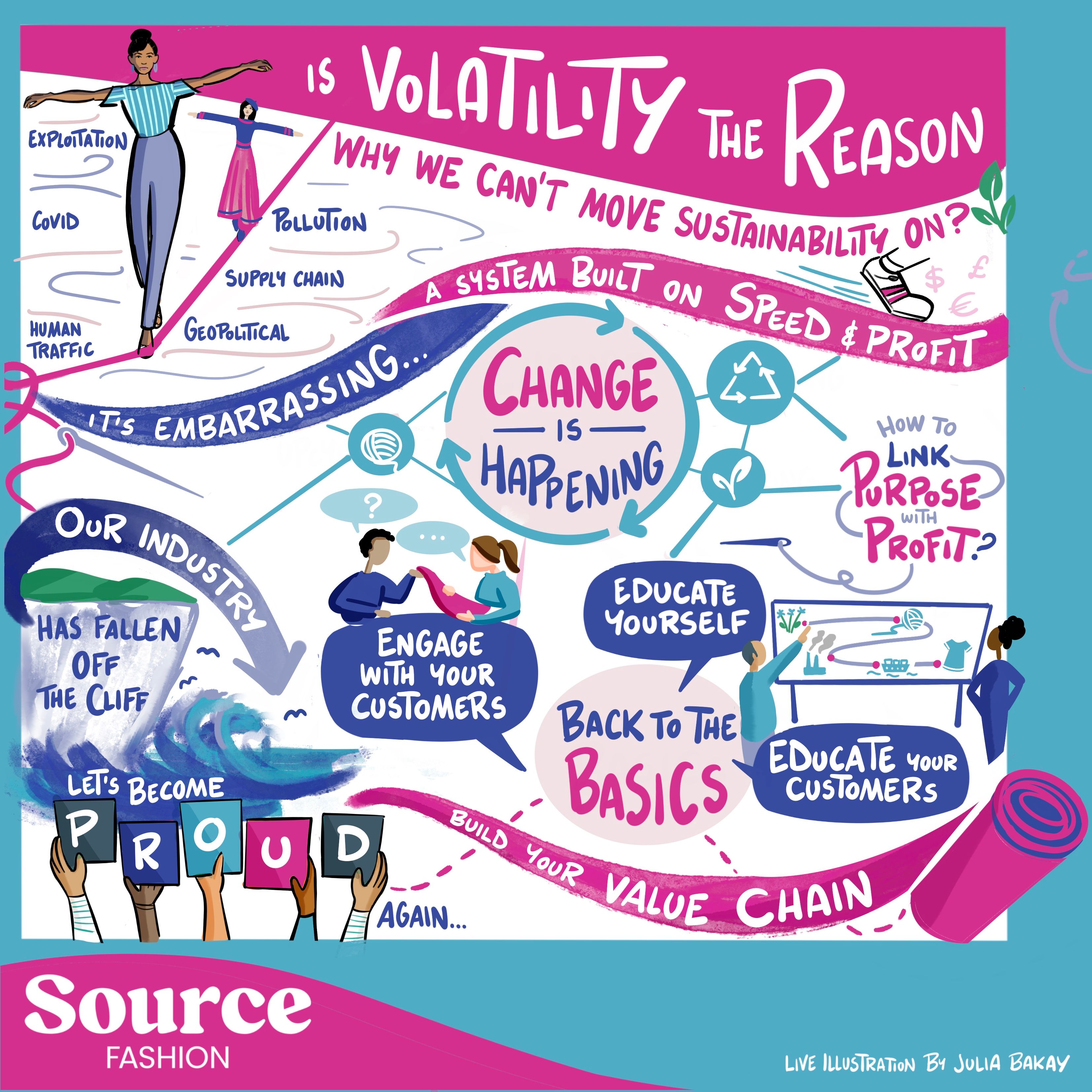
Julia's infographic beautifully outlines some of the themes our industry keeps circling - from 'linking purpose with profit' to a desire to go 'back to basics'.
'A system built on speed and profit' (and why it makes us brittle)
Speed isn't the villain - fragility is. We've mistaken velocity for value. The race to land the trend first led to thinner margins, brittle supply chains, and a habit of solving long-term risks with short-term hacks.
真正的高绩效企业既行动迅速,又行事可预测。
They remove noise from design briefs, lock specs early, reduce SKU bloat, and build supplier partnerships that anticipate demand patterns. In that system, sustainability measures - like chemical controls, wastewater treatment, or living-wage-aligned costing - aren't extras; they're the rails that keep trains on time.
我们该如何将使命与利润结合起来?
人们往往将“使命”视为一项副业——只有在业绩良好时才会去关注。但真正的成功,是在将“使命”与企业的商业驱动力直接挂钩时才得以实现的。
工厂降低能耗可减少费用支出。耐用产品能减少退货率并提高客户忠诚度。合理的交货期可减少质量问题并降低空运成本。
当我们用衡量利润的标准来衡量可持续发展时,我们就不再将其视为一种“可有可无”的道德追求,而是将其视为推动长期成功的动力。
This isn't about 'selling the dream' to the CFO - it's about showing them the numbers and proving that the most responsible choice can also be the most financially sensible one.
回归基本
When we talk about 'going back to basics' in sustainability, it can't mean scaling back ambition.
这意味着要专注于真正能带来实质性改变的根本因素:设计时注重耐用性,选择具有可量化环境效益的材料,确保公平的工作条件,并有效管控物流。
These aren't glamorous steps.
They don't generate headlines or award entries. But they are the foundation of any serious sustainability strategy. Without them, everything else is just window dressing.
'It's embarrassing' - good!'
尴尬是有用的。
It's the gap between the brand we claim to be and the brand we are. Maybe we need to sit with that... and then try and fix that gap.' There's something quietly powerful about the admission that parts of our industry's behaviour are embarrassing. Greenwashed marketing, vague impact claims, overpromised targets - it's all starting to wear thin with consumers, regulators, and even employees.
Embarrassment is a sign that our public narrative and our internal reality are out of sync. But embarrassment can be catalytic. It's the sharp jolt that says, 'We have to do better, and we have to show it.' Not through lofty slogans, but through receipts - proof that our products are made responsibly, that we stand behind their quality, that we're willing to repair or replace when they fail.
Pride in our industry won't come from looking perfect. It'll come from closing the gap between promise and practice.
变化正在发生

It's easy to think progress is glacial, but underneath the noise, change is real.
工厂正在投资更清洁的生产工艺。各品牌对供应链的追踪比以往任何时候都更加深入。
Retailers are trialling resale, rental, and repair models that were fringe ideas only a few years ago. It's happening in pockets, sometimes quietly, often without fanfare. The question is whether these changes are embedded in the DNA of how we do business, or if they're pet projects that can be paused when budgets tighten. Sustainability has to live in every department - design, sourcing, logistics, marketing, finance. If it's seen as 'the sustainability team's job,' it will never scale.
The most successful brands will be the ones where sustainability is invisible because it's just how things are done.
Let's become proud again
Pride won't come from perfect press releases.
It will come from a garment you can point to and say: 'We made this well. We made this fairly. And if anything goes wrong, we'll make it right.' It will come from suppliers who volunteer to join your next project because working with you makes their business stronger. It will come from customers who keep wearing your product - and talking about it - long after the campaign ended.
'Our industry has fallen off the cliff,' the illustration suggests. Maybe that fall cleared the view. We can climb again, and the route is steep but clear: fewer claims, more proof; fewer vendors, deeper ties; fewer SKUs, better product. Volatility isn't the reason we can't move sustainability on. It's the reason we must.
Bottom line: Pride isn't perfection - it's accountable progress, visible in the product and felt in the wear.
想亲眼见证辩论盛况吗?请在此注册,报名参加2026年1月的Source Fashion活动!