

Why fashion brands are selling stories
)
The recent Paul Smith takeover at Selfridges’ Corner Shop was one of the most interesting fashion experiences we’ve ever seen.
Not because of the level of execution - which is always top notch at the Corner Shop - but because of the level of access it gave visitors to the world of Sir Paul. It’s also a brilliant example of how fashion brands are increasingly selling stories rather than just products.

Image credit - Insider Trends
Inside the ‘Dream Factory’
Titled the ‘Dream Factory’, the creative pop-up was part store, part gallery and part working office.
Visitors could see a recreation of the designer’s eclectic office, stuffed with genuine personal objects, photographs, artworks and furniture and even his Mini, with Sir Paul actually working from the space in a piece of genuine retail theatre.
Alongside a special limited edition capsule collection, many of the items decorating the space were shoppable, blurring the boundaries between inspiration and ownership.
Selfridges has done gallery-style pop-ups before, such as in celebration of Sir Elton John, but what really sells the story here is the presence of Sir Paul himself. All the items on display are from his real office, offering a very close quarters glimpse into his working practices and thought process.
It’s the difference between the Rolling Stones store on Carnaby Street and a pop-up recreation of a recording studio where the band are actually practicing and writing music. One sells products with a name or logo on them; the other sells the thinking behind them.
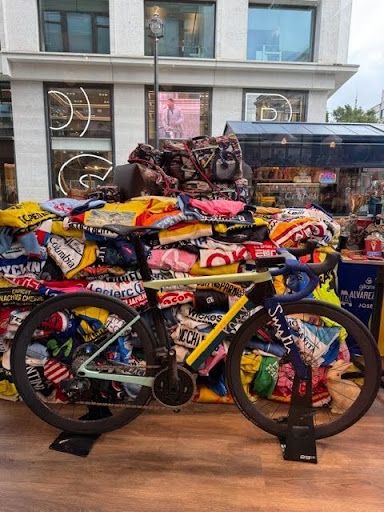
Image credit - Insider Trends
Getting close up
Social media has reduced the distance between us and people of interest. Consumers are used to being able to see through the windows and catch glimpses of other lives, to maybe even get a moment of engagement in the comments.
Online and offline access is very different though. It’s much rarer to have any meaningful engagement in person with a designer or celebrity or influencer.
Exploration into their minds and their creative processes often come posthumously through archives, retrospectives, exhibitions, galleries and museums dedicated to someone’s life and work. Or in the case of something like Tokyo’s Studio Ghibli museum, there’s no interaction with the real life people whose office recreations you see and whose sketchbooks you flick through.
That’s why the Dream Factory pop-up was so revolutionary. It took the person behind the designer name and sat them in a department store where the public could see them, meet them, and be inspired by the myriad items that they surround themselves with.
It connected the personal story to the products on the hangers.
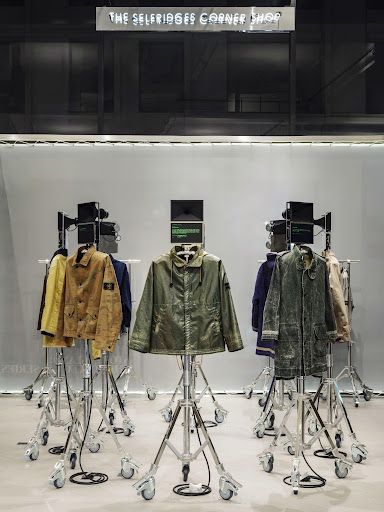
Image credit - Stone Island
More than nostalgia
Of course, Paul Smith and Selfridges aren’t the only ones to realise the value of this. For a few years now, brands have grabbed onto nostalgia as a selling point, bringing back their best selling old designs and reimagining them in new collections. Plus, the stories that go along with them.
Think the revival of Gap and its flagship stores full of old versions of the logo, iconic product highlights, and the timelines of black and white photos of celebs in Gap clothing. Or New Balance, who are doing something similar with heritage displays and photography. Or any number of other fashion and sportswear brands.
The problem with nostalgia as a strategy is that at some point you run out of stories to tell if you simply keep rehashing the same ones. Especially if they’re all about the product.
And this is where the change is happening as fashion brands start adding in new chapters to the story - often more personal ones. These might be from the brand and designers themselves - as with Paul Smith - or they may be from the people who own and collect and love the brand.
Back at Selfridges, Stone Island is running its own Corner Shop pop-up called ‘Selected Works ’982–’026 Stone Island: The Collector Series’. And it’s interesting because Stone Island is collaborating with independent collectors who ‘have helped preserve, interpret and shape the culture of the brand over four decades’.
These passionate collectors include Arco Maher, Better Gift Shop, ‘bout, 194 Local, Louis Holsgrove, Metallic Curtain, Pezze, and SimJae. Each will curate a selection of Stone Island pieces, including a number of items from their own personal archives which will be available to purchase.
Of those pieces, Stone Island’s CEO Robert Triefus notes that “their provenance and individual histories are an important part of their value.”
It’s an acknowledgement that the items on display are made more interesting because of the people and stories attached to them. And that often the cultural power and impact of a brand comes from what the buyers of the products do, not the company itself.
“Stone Island has always been shaped not only by the garments we create, but by the people who find meaning in them,’ said Triefus in an interview with Wallpaper. “Different communities have adopted the brand in different places and in very different ways, often independently of anything we could have orchestrated ourselves.”
It’s a refreshing perspective that provides ample opportunities to uncover and share stories and takes that add to the ones that brands themselves have. Because you can sell the story behind a product, but you can also sell the stories that it’s been a part of.