


O que a experiência de um ano da ASKET com roupa que se lava e usa nos revela sobre a durabilidade do vestuário
)
A longevidade está na base de muitos debates sobre sustentabilidade no mundo da moda. A má qualidade é apontada como um dos principais fatores que contribuem para o impacto negativo da moda rápida. Os críticos referem-se à curta vida útil das peças de roupa, que se desgastam após algumas utilizações e lavagens, sendo depois deitadas fora.
In response, some brands have focused on the quality and longevity of their products as a point of difference.'
'What's often missing though is evidence to back up a lot of these claims.
'How well do the clothes really hold up once they're in the hands of consumers? Can brands genuinely claim that their products last longer than others ' that they're worth paying more for?
'A ASKET passou o último ano a tentar descobrir isso.
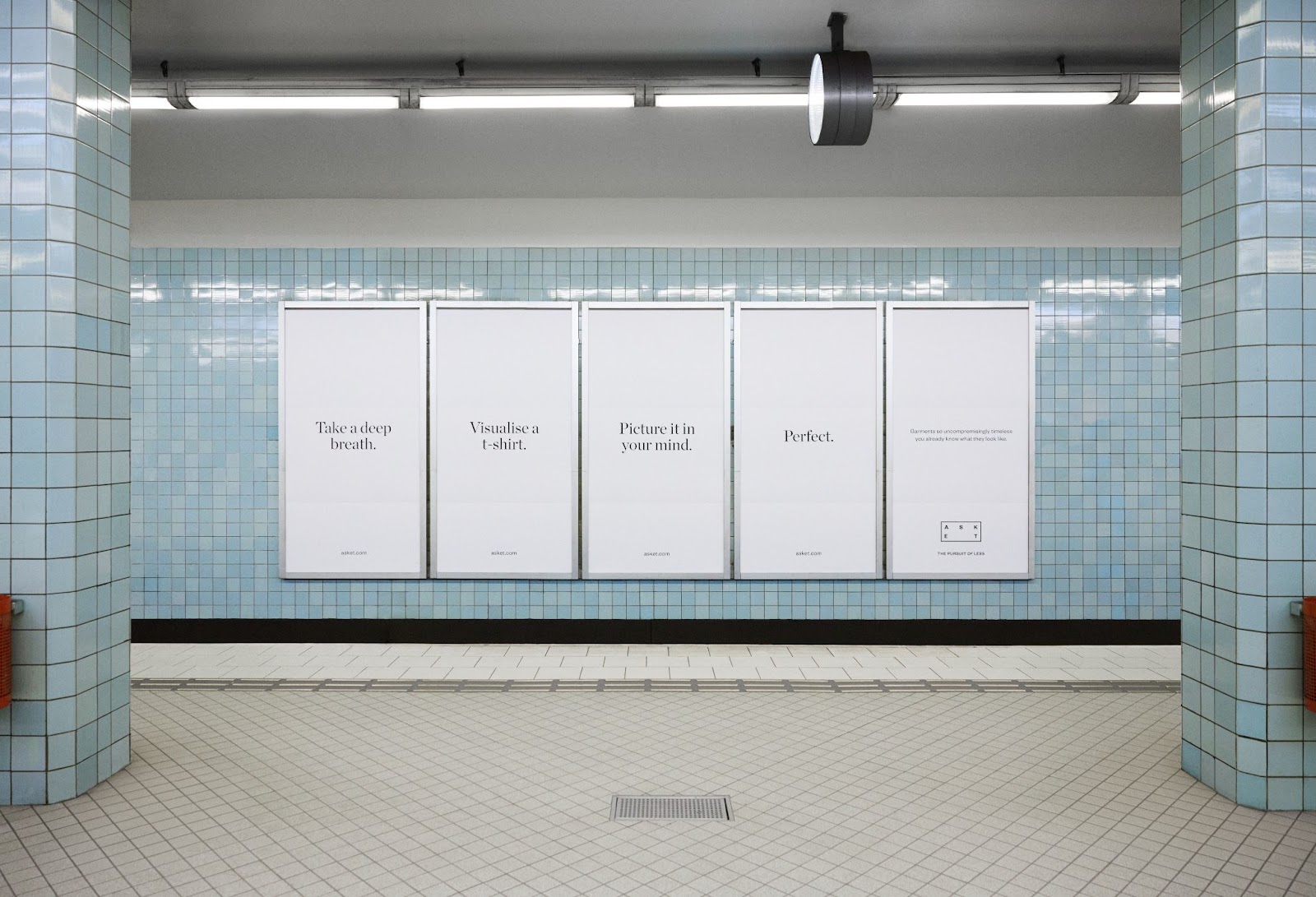
'
Legenda - Crédito da imagem: ASKET
Uma experiência de um ano de utilização e lavagem
Fundada em 2015, a marca de vestuário sueca ASKET é um nome bem conhecido no mundo da moda sustentável. A marca limita-se a criar e a vender uma única coleção permanente composta por um número limitado de peças de vestuário essenciais, todas elas fabricadas na Europa a partir de fibras naturais.
'With its products designed to be timeless ' and therefore stay in customer wardrobes for as long as possible ' ASKET wanted to study just how long-lasting its garments are.
'Esta é uma tarefa difícil, tendo em conta que a maioria dos consumidores possui uma grande variedade de peças de roupa, o que significa que as diferentes peças são usadas com frequências diferentes ao longo do tempo. É de esperar que as peças que são usadas e lavadas com mais frequência se desgastem mais rapidamente do que as outras.
'To get a true sense of what happens to clothes when they're worn and washed ' and how long it takes the condition to degrade to the point that a consumer might throw an item out ' ASKET ran a year-long, wear-and-wash experiment.
'Entre 8 de março de 2024 e 8 de março de 2025, 50 homens residentes em Estocolmo participaram no teste. Quatro dos participantes eram funcionários da ASKET; os restantes eram clientes.
'As far as possible, each participant was asked to wear a wardrobe made up of just eight ASKET products for the whole year. This was to make sure that the garments were worn as much as possible, essentially simulating the number of wears they might be expected to get over the course of multiple years in a typical customer's wardrobe.
'As oito peças de roupa escolhidas foram 2 t-shirts, 1 camisa Oxford, 1 camisola de lã merino, 1 camisola de caxemira, 1 camisola com capuz, 1 par de calças de ganga e 1 par de calças chino.
'Os participantes tinham de usar pelo menos uma das oito peças de vestuário em, no mínimo, 85% dos dias em que a experiência decorreu.
'Então, quais foram os resultados?
'
Legenda - Crédito da imagem: ASKET
O que revelam os dados?
Reporting was key to the value of the experiment ' ASKET needed to be able to track wears and washes for each item per participant. So, the brand built its own basic tracking app.
'To ensure that participants didn't drop off in their data reporting, the app sent a text message to each participant each evening, asking them to log their data for the day. This included which item(s) they'd worn that day, if the garment(s) had been washed, and a condition rating for the garment(s).
'By asking for a condition rating each time ' ranging from 1 (trash) to 5 (mint) ' ASKET hoped to be able to monitor how each item degraded over time from wear and washing.
'At this point, ASKET hasn't released the full data from the experiment, but we do have stats from the first 300 days ' which is over 82% of the test period. Essentially, we can get a pretty good idea of how the products held up.
'Em primeiro lugar, os participantes usaram pelo menos uma das peças de roupa em 87% dos dias. Este valor é superior aos 85% exigidos para participar.
'Em média, os participantes usavam dois dos oito artigos todos os dias.
'Após 300 dias, cada peça de roupa tinha sido usada, em média, 62 vezes e lavada 12 vezes.
And after all that, the average condition rating for each garment was 4/5. That's not far off the mint rating (5).
'Things get more interesting when you dig down into some of the individual participant reporting. For example, one contributor reported wearing the jeans 298 times ' essentially every day of the experience ' and still rated them 4 out of 5 for condition after all that wear.
'Uma t-shirt usada 135 vezes por outro participante também recebeu uma classificação de 4 em 5 quanto ao estado após 300 dias.
'É importante referir que as únicas peças que receberam a classificação 1 (inutilizáveis) após 300 dias foram aquelas em que o consumidor sofreu algum tipo de acidente, como manchar ou rasgar a peça de roupa.
'
Legenda - Crédito da imagem: ASKET
A longevidade é realmente difícil de medir
The biggest thing that ASKET's experiment reveals though is that longevity is hard to measure ' because so much of it is down to customer action.
'Take the ASKET customer who wore their t-shirt 135 times in 300 days. They also report washing that t-shirt 29 times. A different person may have washed the same t-shirt more ' or less ' times after the same amount of wear, which could have affected the condition rating.
'The number of times a customer puts a garment on is one thing. Another is what they do while wearing it ' what level of friction and stress are their clothes under? Are they doing light, everyday activities or are they working in manual labour? Are they playing sports or sitting at a desk? Are they walking 2,000 steps or 10,000 steps a day in a pair of shoes?
'Washing is another factor. Some customers will wash an item after every wear and some won't. Some items like jeans are designed to go a lot longer between washes than others. Some customers will perfectly follow the washing instructions and some won't, affecting longevity.
'E, como a própria ASKET observa, algumas peças são utilizadas com mais frequência do que outras. É provável que uma t-shirt e um par de calças de ganga sejam usados mais vezes ao longo do ano do que uma peça de malha. As peças de roupa que se usam por baixo de outras podem precisar de ser lavadas com mais frequência do que uma peça de roupa exterior ou estar sujeitas a mais atrito.
'Essentially, it is really hard to put a figure on how durable a product is. But by conducting this experiment, ASKET now has better data than most brands on how its products hold up under real-life conditions of customers' wear and care ' of customers living with them. And it can share that with shoppers to help guide their decision-making.
'
Legenda - Crédito da imagem: ASKET
A durabilidade é essencial para um futuro sustentável da moda
At the same time, we can't ignore the reality that the vast majority of consumers don't hold onto all their clothing purchases long enough for them to wear out. Therefore claims of durability and reduced cost per wear may not be the most effective way to make them buy, because they won't have the item long enough to see those benefits.
'But this doesn't mean that brands should abandon the quest for quality and longevity.'
As Sweden's Mistra Future Fashion reported, 'extending the lifetime of each garment so it can be used for twice as long would reduce the environmental burden by almost half'.
'A sustainable fashion future isn't just about clothing that an individual customer can own until it wears out ' even if buying less and wearing it more is the most environmentally friendly option. It's also about garments that are durable enough to be resold and re-worn multiple times by different people, so that consumers have a viable alternative to always buying new.'