
La réparation n'est-elle qu'une question de relations publiques ?
)
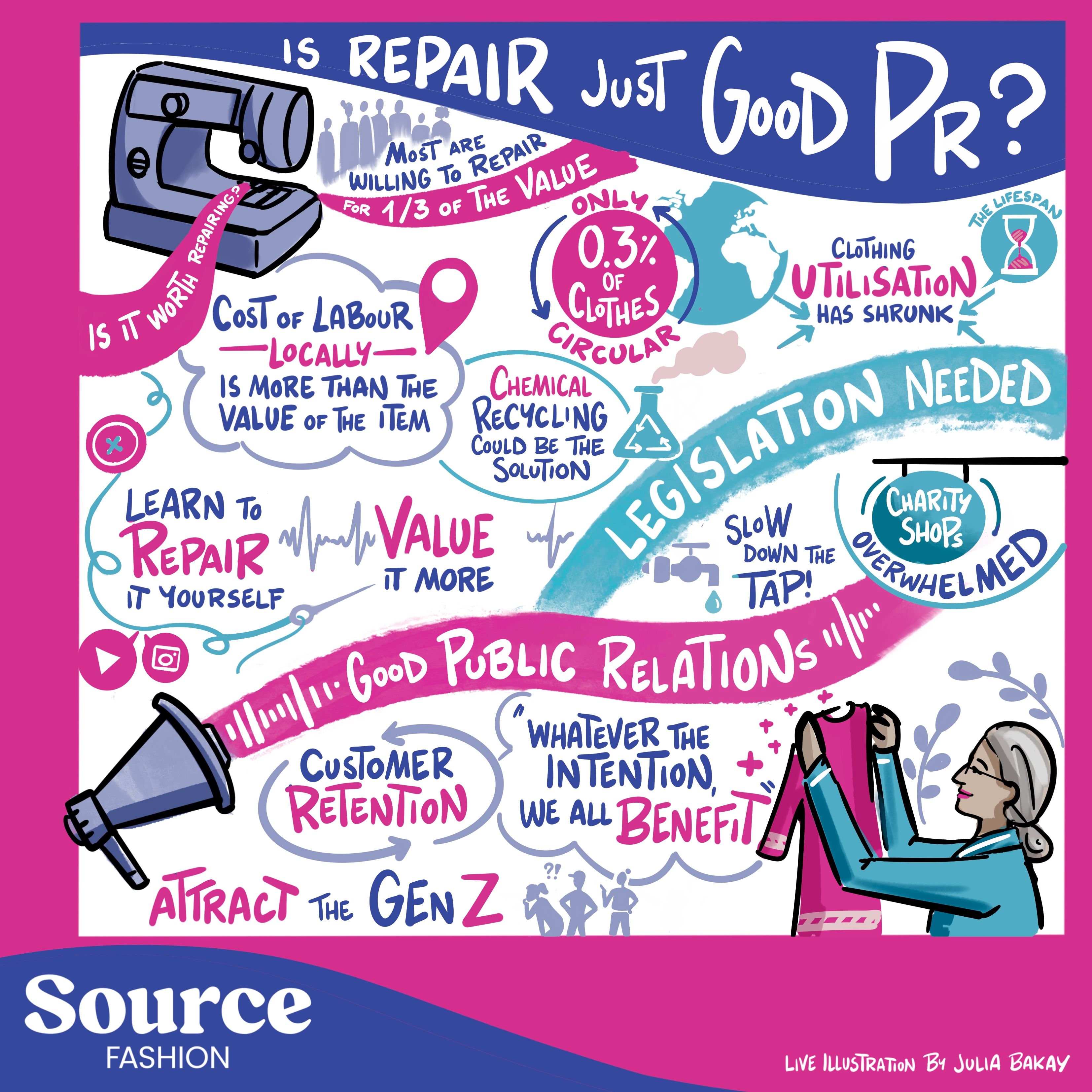
Bienvenue sur Source Illustrated, une série d'articles inspirée de l'énergie et des idées issues de notre scène « Source Debates » lors du salon Source Fashion, en juillet 2025. Nous nous sommes associés à Julia Bakay, qui a su retranscrire cette énergie et ces idées dans une infographie percutante. Chaque semaine, nous explorerons les thèmes abordés dans cette création graphique, en mettant en lumière les réflexions autour de certaines des questions les plus pressantes du secteur.
Inscrivez-vousici pour assister aux débats lors du prochain salon.
Is repair just good PR or a real solution for fashion?
Repair has become fashion’s new favourite word. Suddenly, brands are offering mending services, sewing workshops, repair vouchers, and glossy campaigns celebrating “second life” clothing. It’s clever marketing but is it meaningful change, or a sustainability PR stunt?
The truth is complicated. Repair can be a powerful tool for circular fashion. But right now, it’s sitting in a strange space between genuine impact and brand-driven storytelling.
The economics don’t add up yet
Here’s the uncomfortable reality: the cost of local labour to repair a T-shirt or a dress often exceeds the price of buying a new one. We’ve normalised clothing that’s cheaper to replace than to fix. No wonder the amount of times we actually wear our clothes are shrinking.
Most consumers say they’re willing to repair an item… but only if the repair costs less than a third of what they originally paid. When a blouse costs £12, the maths speaks for itself.
Repair is only truly scalable when clothing is built to be valued.
Learning to repair changes how we treat clothes
There’s another layer to this conversation - ownership. When people learn to sew on a button, darn a sock, patch denim, or take a hem up, something shifts. Clothing becomes something to maintain, not discard.
Teaching repair isn’t just practical. It has psychological impact.
If we invest labour into keeping something alive, we value it more.
Communities are waking back up to this - local repair cafes, TikTok sewing hacks, YouTube tutorials, and visible mending trends are nudging us back toward skill, not disposability.
Charity shops are overwhelmed
While brands celebrate repair capsules and “circular collections,” charity shops are drowning in the other side of the story. So much clothing is being donated that even the resale ecosystem can’t cope. We haven’t slowed down the tap, we’ve simply rerouted the water.
Repair isn’t the whole answer. But it can reduce the flood.
Chemical recycling might help, but we’re not there yet
Chemical recycling is often presented as the silver bullet — breaking down blended fabrics so fibres can be reused again and again. It’s promising, but still in its infancy. Until it’s affordable, scalable, and energy efficient, it won’t solve the volume problem on its own.
Which brings us back to the core question: are repair programmes helping the planet, or helping brand image?
Good PR, but also good outcomes
Let’s be honest: repair is fantastic PR. It attracts Gen Z, signals responsibility, boosts customer retention, and positions brands as “conscious.” But here’s the twist - even if the intention is marketing, the outcome is positive.
If repair services keep clothes in use longer, we all win:
-
Fewer textiles headed to landfill
-
Lower demand for virgin materials
-
Reduced pressure on waste systems
-
More emotional connection to what we own
So maybe good PR isn’t the enemy, not if it results in real impact.
Legislation will change everything
At some point, voluntary commitments won’t be enough. As governments introduced EPR, durability standards, and repairability requirements, repair will shift from a nice-to-have to a must-have. When legislation rewards longevity and punishes waste, business models will follow.
And that’s when repair becomes more than a marketing message, it becomes an obligation.
If fast fashion keeps churning out ultra-cheap garments, repair stays symbolic. But if the industry prioritises longevity, retailers, consumers, and repair culture can work together to close the loop.
Repair isn’t perfect. It isn’t a magic fix. But it is a step, and sometimes a small cultural shift can change everything.
Because whether the motivation is marketing or mission, keeping clothes in use longer will always be better than throwing them away.
À propos du débat
This blog was inspired by the Source Fashion debate “Is repair just good PR?" hosted by Christina Dean, Founder of Redress and the R Collective. Want to see them in action? Register here for the next show