


What ASKET's year-long wash-and-wear experiment tells us about clothing longevity
)
La longévité est au cœur de nombreux débats sur le développement durable dans le secteur de la mode. La mauvaise qualité est souvent citée comme l’un des principaux facteurs contribuant à l’impact négatif de la « fast fashion ». Les détracteurs soulignent la courte durée de vie des vêtements, qui s’abîment après seulement quelques utilisations et lavages, avant d’être jetés.
In response, some brands have focused on the quality and longevity of their products as a point of difference.'
'What's often missing though is evidence to back up a lot of these claims.
'How well do the clothes really hold up once they're in the hands of consumers? Can brands genuinely claim that their products last longer than others ' that they're worth paying more for?
'ASKET a passé l'année dernière à chercher à le savoir.
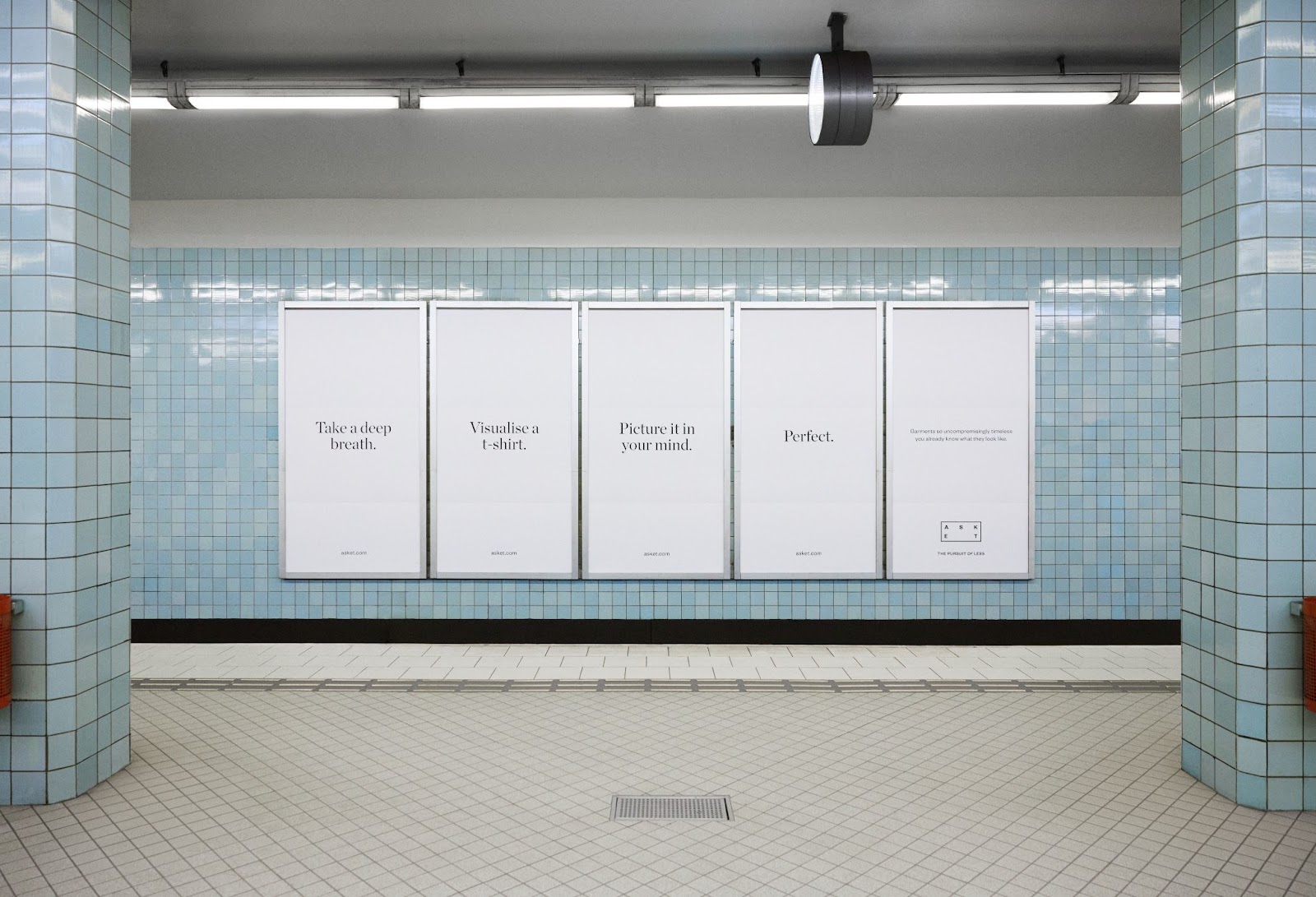
'
Légende - Crédit photo : ASKET
Une expérience d'un an portant sur l'usure et les lavages
Fondée en 2015, la marque de vêtements suédoise ASKET est une référence dans le domaine de la mode durable. Elle ne crée et ne commercialise qu’une seule collection permanente composée d’un nombre limité de vêtements indispensables, tous fabriqués en Europe à partir de fibres naturelles.
'With its products designed to be timeless ' and therefore stay in customer wardrobes for as long as possible ' ASKET wanted to study just how long-lasting its garments are.
'C'est une tâche difficile, étant donné que la plupart des consommateurs possèdent de nombreux vêtements différents, ce qui signifie que chaque vêtement est porté à une fréquence variable au fil du temps. On peut s'attendre à ce que les vêtements portés et lavés plus souvent s'usent plus rapidement que les autres.
'To get a true sense of what happens to clothes when they're worn and washed ' and how long it takes the condition to degrade to the point that a consumer might throw an item out ' ASKET ran a year-long, wear-and-wash experiment.
'Du 8 mars 2024 au 8 mars 2025, 50 hommes résidant à Stockholm ont pris part à ce test. Quatre d'entre eux étaient des employés d'ASKET ; les autres étaient des clients.
'As far as possible, each participant was asked to wear a wardrobe made up of just eight ASKET products for the whole year. This was to make sure that the garments were worn as much as possible, essentially simulating the number of wears they might be expected to get over the course of multiple years in a typical customer's wardrobe.
'Les huit vêtements sélectionnés étaient : 2 t-shirts, 1 chemise Oxford, 1 pull en laine mérinos, 1 pull en cachemire, 1 sweat-shirt, 1 jean et 1 pantalon chino.
'Les participants devaient porter au moins l'un des huit vêtements pendant au moins 85 % des jours où l'expérience s'est déroulée.
'Alors, quels ont été les résultats ?
'
Légende - Crédit photo : ASKET
Que révèlent les données ?
Reporting was key to the value of the experiment ' ASKET needed to be able to track wears and washes for each item per participant. So, the brand built its own basic tracking app.
'To ensure that participants didn't drop off in their data reporting, the app sent a text message to each participant each evening, asking them to log their data for the day. This included which item(s) they'd worn that day, if the garment(s) had been washed, and a condition rating for the garment(s).
'By asking for a condition rating each time ' ranging from 1 (trash) to 5 (mint) ' ASKET hoped to be able to monitor how each item degraded over time from wear and washing.
'At this point, ASKET hasn't released the full data from the experiment, but we do have stats from the first 300 days ' which is over 82% of the test period. Essentially, we can get a pretty good idea of how the products held up.
'Tout d'abord, les participants ont porté au moins l'un de ces vêtements pendant 87 % des jours. Ce chiffre est supérieur aux 85 % requis pour participer à l'étude.
'En moyenne, les participants portaient deux des huit vêtements chaque jour.
'Au bout de 300 jours, chaque vêtement avait été porté en moyenne 62 fois et lavé 12 fois.
And after all that, the average condition rating for each garment was 4/5. That's not far off the mint rating (5).
'Things get more interesting when you dig down into some of the individual participant reporting. For example, one contributor reported wearing the jeans 298 times ' essentially every day of the experience ' and still rated them 4 out of 5 for condition after all that wear.
'Un t-shirt porté 135 fois par un autre participant a également obtenu une note de 4 sur 5 pour son état après 300 jours.
'Il est important de noter que les seuls articles ayant obtenu la note de 1 (inutilisables) après 300 jours étaient ceux pour lesquels le consommateur avait subi un incident, comme une tache ou une déchirure.
'
Légende - Crédit photo : ASKET
La longévité est vraiment difficile à mesurer
The biggest thing that ASKET's experiment reveals though is that longevity is hard to measure ' because so much of it is down to customer action.
'Take the ASKET customer who wore their t-shirt 135 times in 300 days. They also report washing that t-shirt 29 times. A different person may have washed the same t-shirt more ' or less ' times after the same amount of wear, which could have affected the condition rating.
'The number of times a customer puts a garment on is one thing. Another is what they do while wearing it ' what level of friction and stress are their clothes under? Are they doing light, everyday activities or are they working in manual labour? Are they playing sports or sitting at a desk? Are they walking 2,000 steps or 10,000 steps a day in a pair of shoes?
'Washing is another factor. Some customers will wash an item after every wear and some won't. Some items like jeans are designed to go a lot longer between washes than others. Some customers will perfectly follow the washing instructions and some won't, affecting longevity.
'Et comme le souligne ASKET, certains vêtements sont portés plus souvent que d'autres. Un t-shirt et un jean sont susceptibles d'être portés plus souvent tout au long de l'année qu'un pull. Les vêtements portés en sous-couche peuvent nécessiter d'être lavés plus souvent que ceux portés par-dessus, ou être soumis à davantage de frottements.
'Essentially, it is really hard to put a figure on how durable a product is. But by conducting this experiment, ASKET now has better data than most brands on how its products hold up under real-life conditions of customers' wear and care ' of customers living with them. And it can share that with shoppers to help guide their decision-making.
'
Légende - Crédit photo : ASKET
La durabilité est essentielle pour un avenir durable de la mode
At the same time, we can't ignore the reality that the vast majority of consumers don't hold onto all their clothing purchases long enough for them to wear out. Therefore claims of durability and reduced cost per wear may not be the most effective way to make them buy, because they won't have the item long enough to see those benefits.
'But this doesn't mean that brands should abandon the quest for quality and longevity.'
As Sweden's Mistra Future Fashion reported, 'extending the lifetime of each garment so it can be used for twice as long would reduce the environmental burden by almost half'.
'A sustainable fashion future isn't just about clothing that an individual customer can own until it wears out ' even if buying less and wearing it more is the most environmentally friendly option. It's also about garments that are durable enough to be resold and re-worn multiple times by different people, so that consumers have a viable alternative to always buying new.'